


When people talk about American architectural legends, names like Frank Lloyd Wright or Philip Johnson usually come up first.
But here in Atlanta, we have our own quiet icon.
His name was Robert M. Green, and if you love Atlanta mid-century modern homes, chances are you’ve admired one of his designs without even realizing it.
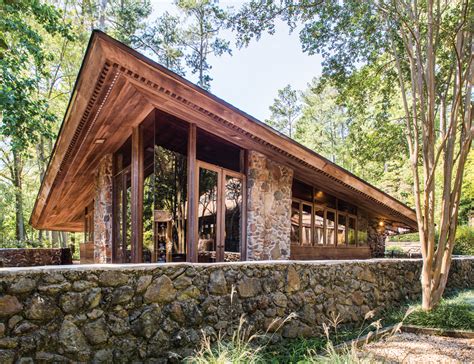
Green didn’t chase fame. He chased harmony. His homes feel grounded, almost grown out of the landscape itself. Sharp geometry. Warm natural materials. Walls of glass pulling the outdoors inside.
They are unmistakable once you know what you’re looking at.
And after years of selling mid-century modern homes in Atlanta, I can always spot a Robert Green home the moment I walk through the door.
From Savannah to Frank Lloyd Wright’s Inner Circle
Robert Green was born in Savannah, Georgia in 1935, but his path toward architecture wasn’t obvious at first. In fact, he originally planned to pursue music.
Everything changed after his family moved to Atlanta when he was 14.
By 17 he was attending Georgia Tech’s School of Architecture, where he spent hours studying in the architecture library. That’s where he discovered the work of Frank Lloyd Wright, and it completely changed the trajectory of his life.
Green became fascinated by Wright’s philosophy of organic architecture, the idea that buildings should grow naturally from their environment rather than dominate it.
But the architectural style being taught at Georgia Tech didn’t inspire him.
So he did something bold.
He dropped out.
Then he mailed his drawings directly to Taliesin West, Frank Lloyd Wright’s winter home and architecture school in Arizona.
Soon after, Green was invited to interview with Wright himself.
And Wright hired him on the spot.
Green moved to Arizona and began working alongside the 90-year-old master architect. Tragically, Wright passed away just six months later, making Robert Green the last intern Frank Lloyd Wright ever hired.
But those six months would shape Green’s design philosophy for the rest of his life.
The Influence of Organic Architecture
Green often referred to Frank Lloyd Wright simply as “The Master.”
The lessons he learned at Taliesin became the foundation for his work throughout Georgia.
At the heart of Green’s design philosophy was organic architecture. The idea that homes should respect the land, embrace natural materials, and create a seamless relationship between interior spaces and the surrounding environment.
You can see this philosophy throughout many Atlanta mid-century homes he designed.
His houses don’t sit on the land.
They settle into it.
Many follow the natural slope of the property. Rooms open outward toward wooded views. Large expanses of glass allow sunlight to flood interior spaces while framing the landscape outside.
Green’s homes often feature:
• expansive windows
• flowing open floor plans
• natural wood, stone, and glass
• thoughtful landscaping integrated into the architecture
The result is something buyers still crave today when they search for mid-century modern homes Atlanta buyers love.
Homes that feel calm. Natural. And deeply connected to their surroundings.
Signature Robert Green Homes in Atlanta
Over the years I’ve toured many of Green’s designs while helping clients explore Atlanta mid-century modern real estate. Each one has its own personality, but they all share that unmistakable sense of harmony with nature.
Here are a few standout examples.
Arrowhead House – Amberwood Neighborhood
Built in 1962, the Arrowhead House is one of Green’s most striking designs.
The property includes four separate structures totaling roughly 6,800 square feet, including:
• a main house with three bedrooms
• a guest house with two additional bedrooms
• a pool house with a full kitchen
• a recreation room above the garage
The layout creates a private compound that feels both expansive and intimate at the same time. It remains one of the most talked-about architectural homes in the Amberwood community near Northlake.
The Kingloff House – Buckhead
The Kingloff House, built in 1980, shows how Green’s design philosophy evolved over time.
The 4,600-square-foot home sits on a 2-acre lot in Buckhead near Paces Ferry and Mount Paran. The house unfolds across rolling terrain surrounded by mature trees.
Large windows frame views of the pool and gardens while natural stone elements add warmth to the structure.
Today, homes like this can command prices approaching $3 million, proving that thoughtfully designed Atlanta mid-century modern homes hold their value incredibly well.
The Copeland House – A Landmark Project
One of Green’s earliest and most important projects was the Copeland House, built between 1960 and 1962.
The home nestles into a hillside and opens outward toward the landscape beyond. In 1987 Green returned to the property and designed an addition that included a study, den, and office above the carport.
It’s a perfect example of his philosophy that homes should evolve naturally over time while remaining rooted in the landscape.
The Donges House – Stone Mountain
The Donges House, located near Stone Mountain, holds special significance because it was the final home Green designed.
The property gained national attention when it was featured on HGTV in 2002, helping introduce a new generation to Green’s work.
Even today it remains one of the most recognizable examples of Georgia’s mid-century modern architecture.
Robert Green’s Impact on Atlanta Architecture
During the 1960s and 1970s, Atlanta was dominated by traditional architecture. Brick colonials and ranch homes were the norm.
Robert Green offered something different.
His homes brought modern design and organic architecture to the South, creating spaces that felt both contemporary and deeply connected to nature.
That influence still shapes many mid-century modern neighborhoods in Atlanta today.
His work also inspired younger architects who were drawn to his approach of blending architecture with the landscape rather than fighting against it.
Although Green passed away in 2003, many of his homes remain beautifully preserved and highly sought after by buyers searching for authentic architectural properties.
Why Robert Green Homes Still Matter Today
What’s fascinating about Robert Green’s work is how modern it still feels.
Long before “sustainability” became a buzzword, Green was designing homes that embraced natural light, respected the landscape, and used materials that aged gracefully.
Today’s buyers looking to buy a mid-century modern home in Atlanta are often searching for exactly those qualities.
That’s one reason these homes continue to attract strong demand.
They’re not just houses.
They’re pieces of Atlanta’s architectural story.
Where to See Robert Green Homes in Atlanta
If you’re curious to see Green’s work in person, one of the largest concentrations of his designs can be found in the Amberwood community near Northlake Mall.
Driving through the neighborhood feels like stepping into a living gallery of Atlanta mid-century homes.
Sharp rooflines. Walls of glass. Homes that feel quietly dramatic without trying too hard.
For architecture lovers, it’s one of the most interesting areas of the city.
Interested in Owning a Piece of Atlanta’s Architectural History?
As someone who spends a lot of time inside Atlanta mid-century modern homes, I can tell you these properties have a special kind of magic.
They feel different.
They live differently.
And when buyers find the right one, they often fall in love instantly.
If you’re hoping to buy a mid-century modern home in Atlanta, or you’re lucky enough to own one and are curious about its value, I’d love to help you explore what’s possible.
Because homes like these aren’t just real estate.
They’re architecture worth preserving.
Vanessa Reilly
DOMO Realty
Atlanta Mid-Century Modern Specialist
Looking for your dream Atlanta Mid-Century Home? Let’s have a conversation